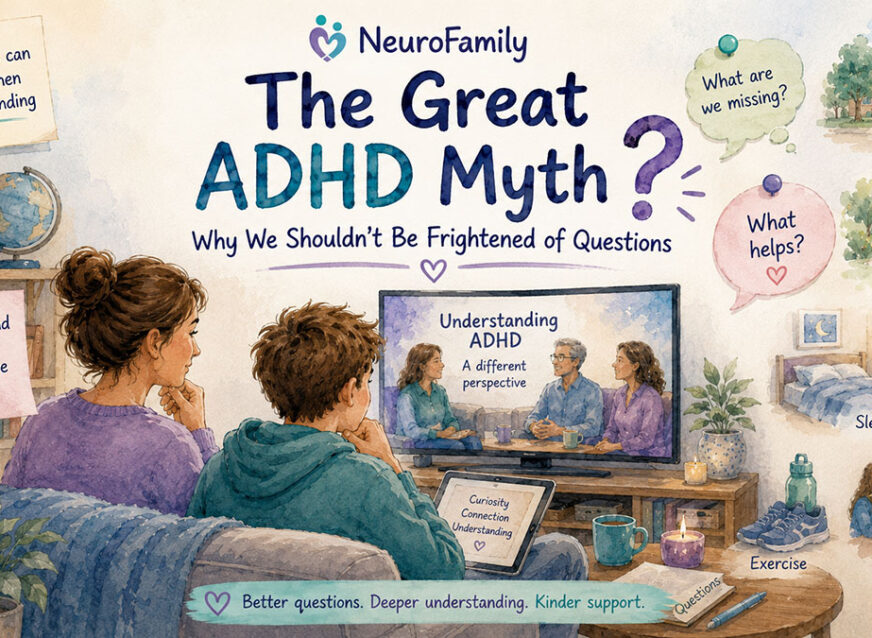
The Great ADHD Myth? — Why We Shouldn’t Be Frightened of Questions
A forthcoming Channel 4 documentary, The Great ADHD Myth?, is already generating considerable discussion before many of us have even had an opportunity to watch it.
Some people with ADHD are understandably worried.
Parents are concerned that their children’s difficulties may be dismissed. Adults who have finally received an explanation for difficulties they may have experienced throughout their lives are worried that their diagnosis will suddenly be questioned.
Others are angry about the title itself or concerned about the views of some of the professionals appearing in the programme.
Those feelings are understandable.
But perhaps we need to be careful that the publicity surrounding the programme doesn’t become more important than the programme itself.
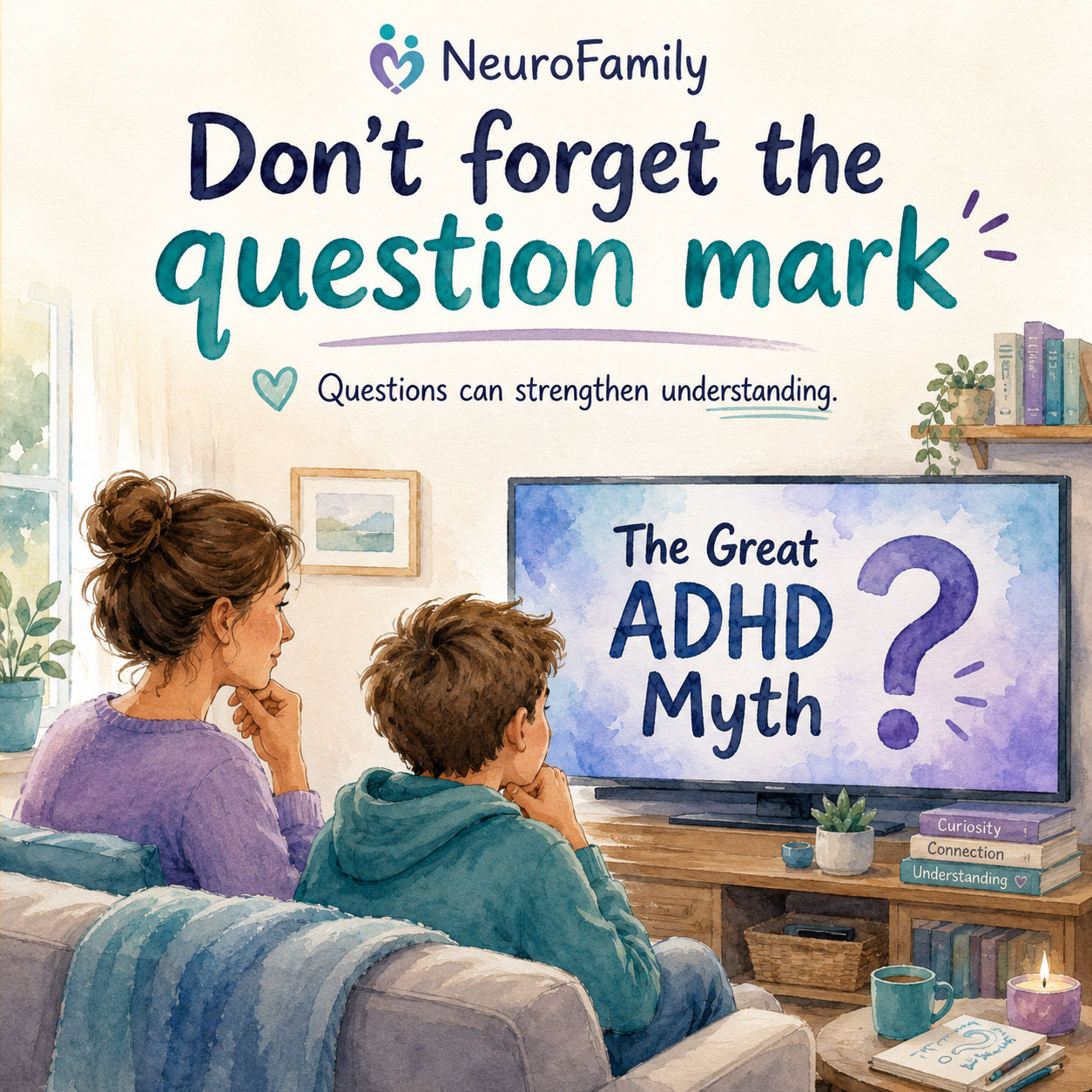
Don’t forget the question mark
The title The Great ADHD Myth? is provocative.
The words ADHD and myth appearing together are always going to attract attention.
But there is a question mark at the end.
A question is being asked.
We don’t yet know whether we will agree with the answers the programme provides, but should we really be frightened of the question?
Perhaps questioning our understanding can sometimes strengthen it.
From defending a diagnosis to explaining an experience
When somebody questions ADHD, our natural response can be to defend it.
Research is produced. Statistics are quoted. Professionals are referenced.
Sometimes that is necessary.
But there is another conversation available to us.
“Would you like to know what ADHD is actually like for me?”
That question takes us away from an argument about a diagnostic label and towards understanding someone’s lived experience.
Someone might explain their difficulty initiating tasks despite desperately wanting to complete them.
Another person might describe what happens when multiple sounds, thoughts and demands compete for their attention.
Someone else might explain the exhaustion involved in maintaining concentration throughout a working day.
Another might talk about impulsivity, emotional regulation, organisation, sleep or remembering everyday tasks.
Two people can share the same diagnosis while experiencing it very differently.
Understanding that difference matters.
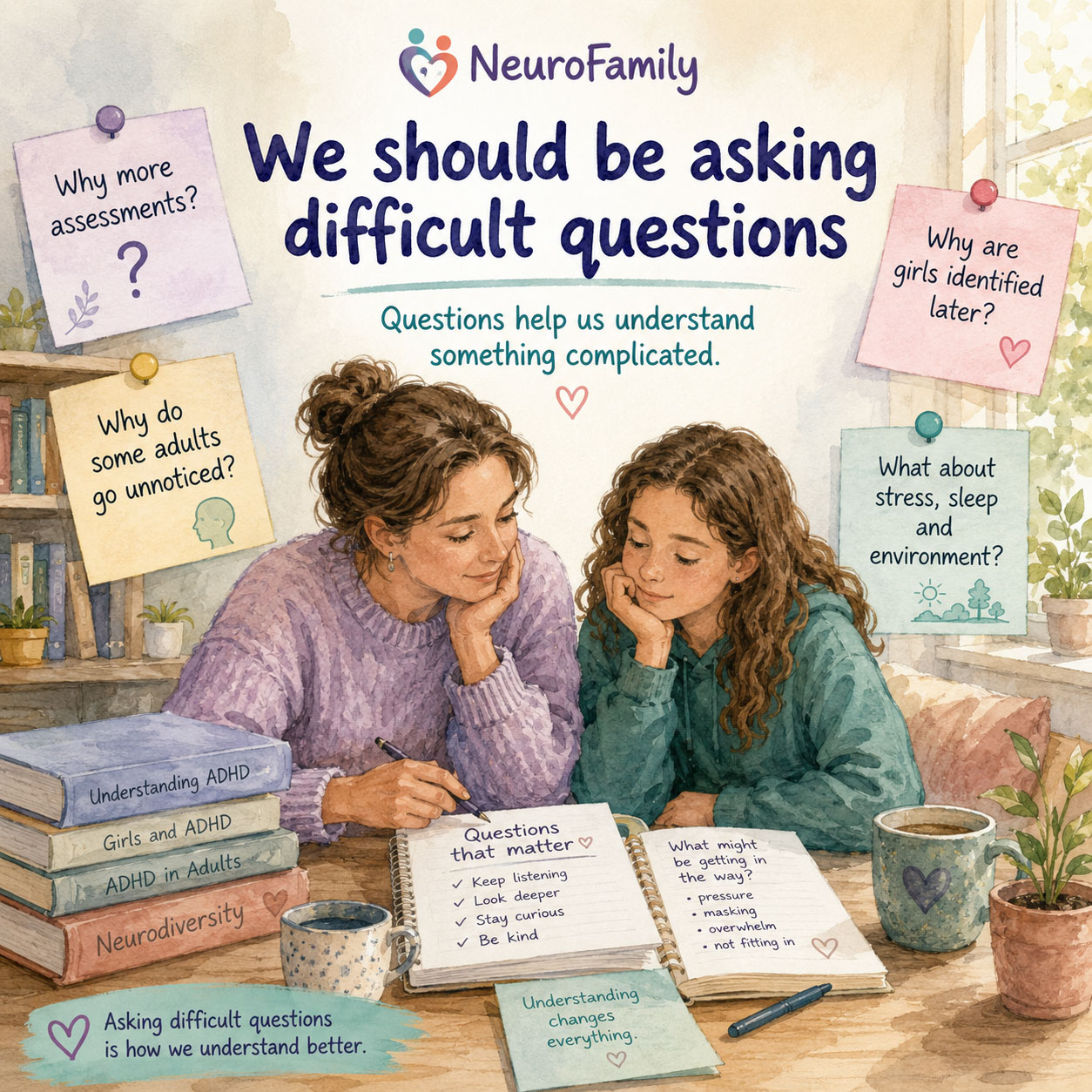
We should be asking difficult questions
There are legitimate questions surrounding ADHD.
Why are increasing numbers of people seeking assessments?
Are assessments always comprehensive enough?
Why have so many adults reached adulthood without their difficulties being recognised?
Why are girls and women often identified later?
How much influence do education, employment, technology, sleep, stress, trauma, diet and our wider environment have?
These questions don’t automatically mean ADHD doesn’t exist.
They mean we are trying to understand something complicated.
We should be able to question how ADHD is assessed and treated without dismissing the people experiencing those difficulties.
When professional voices carry more weight
There is another concern that deserves acknowledging.
The people involved in programmes like this may include doctors, psychiatrists, researchers and other professionals.
Their qualifications matter. Their knowledge and experience should be respected and listened to.
But their professional status also gives their words considerable authority.
For somebody watching at home, hearing a psychiatrist make a statement about ADHD can understandably carry more weight than hearing the same statement from somebody without those qualifications.
We may hear:
“They’re a psychiatrist, so they must know.”
That is where I think we need to be careful.
Expertise is important, but expertise does not mean there is only one professional perspective.
Medicine, psychology and psychiatry have always developed through questioning, research, disagreement, new evidence and professionals challenging the thinking of other professionals.
We shouldn’t dismiss somebody’s argument simply because we don’t like what they are saying.
But neither should we accept an argument simply because of the qualifications of the person saying it.
Instead, we can ask:
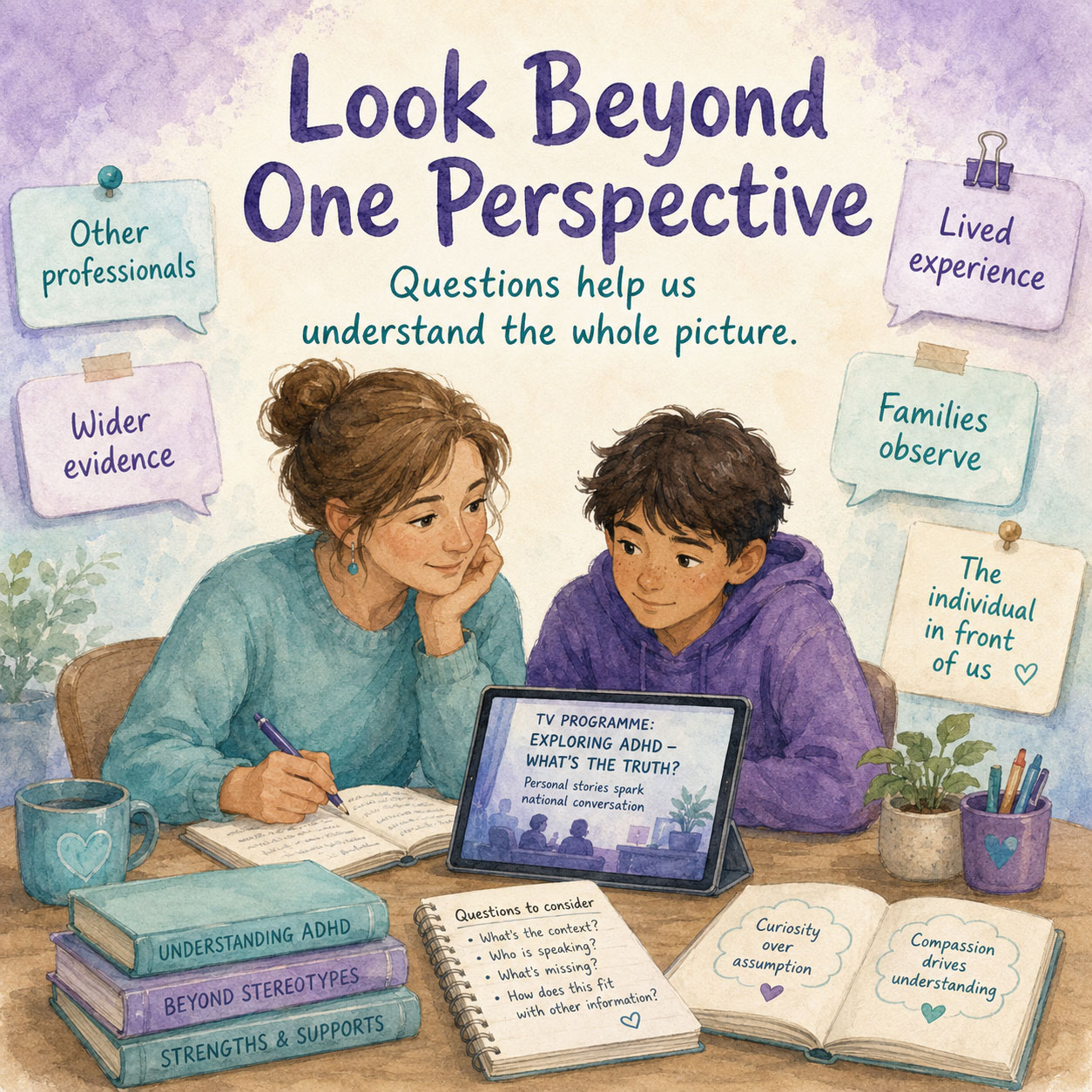
Is this the only professional perspective?
What does the wider evidence tell us?
What do other professionals say?
What are people with ADHD telling us about their experiences?
What are families observing every day?
And importantly:
What is happening for the individual in front of us?
My concern isn’t that somebody might watch a programme like this and start asking questions about ADHD.
Questions can be useful.
My concern would be if somebody watches it and believes they no longer need to ask questions.
A teacher might hear one explanation and decide a child’s difficulties are simply behaviour.
An employer might decide that everybody experiences these difficulties and therefore an adjustment isn’t really necessary.
A family member might decide that someone’s difficulties are caused by their phone, their diet or their lifestyle.
We have then moved away from curiosity.
We have taken one perspective and applied it to an individual without first understanding that individual.
So yes, listen to doctors.
Listen to psychiatrists.
Listen to researchers.
But also listen to the professionals who hold different views.
Listen to people with ADHD.
Listen to families.
And listen to the person standing in front of you.
Professional knowledge matters.
Lived experience matters.
Neither needs to silence the other.
Perhaps our question should remain:
What does all of this help us understand about this person?
Medication shouldn’t become another argument
Medication is a good example of why we need individualised conversations.
For some people ADHD medication can be life-changing and may remain an important part of their lives.
For others it may provide some benefit but not address everything they experience.
For some it may not be appropriate or helpful.
Our own family experience taught me something important about this.
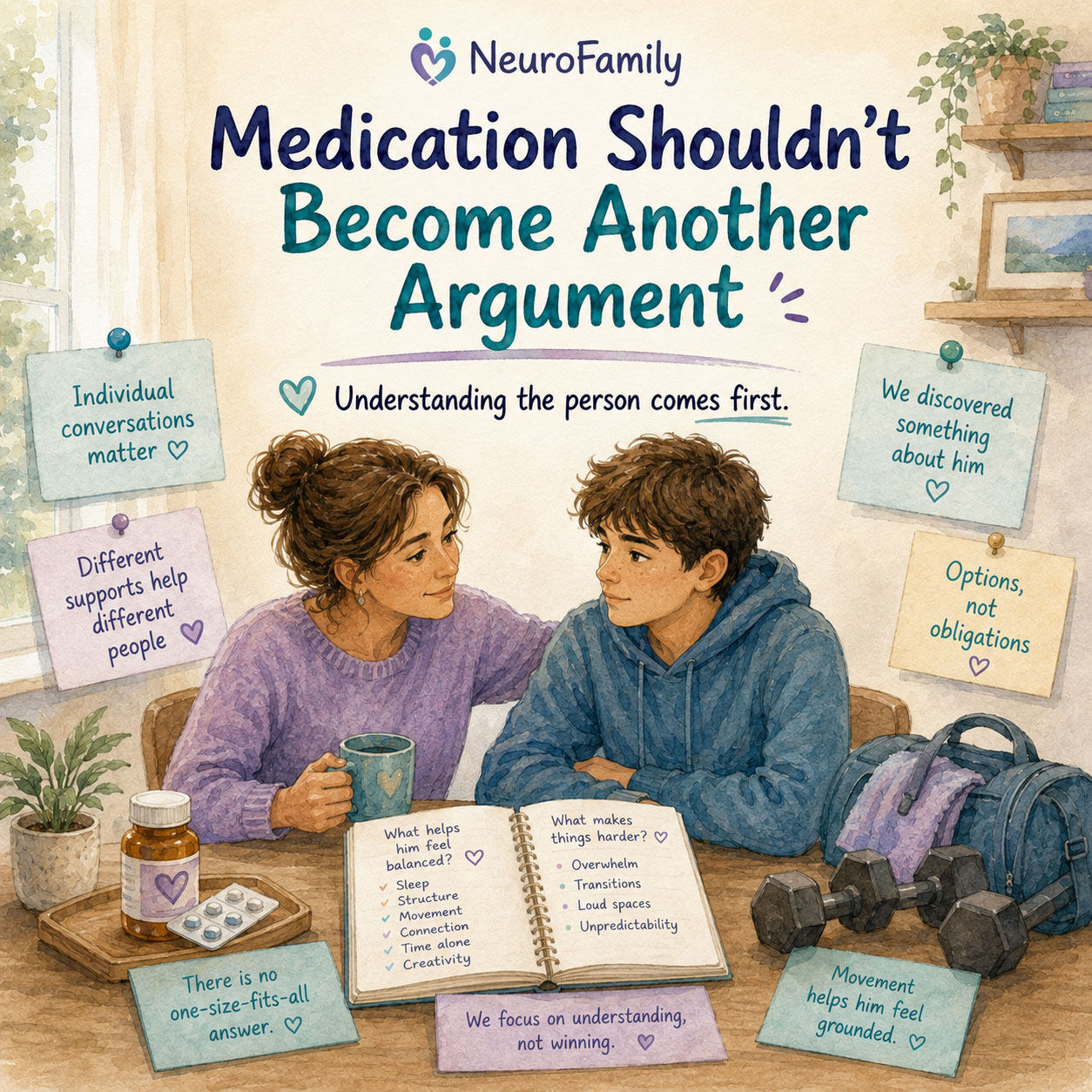
My son used medication for a period of time. As he got older, however, he discovered that going to the gym and doing heavy weight workouts helped him feel grounded and regulated.
That doesn’t mean exercise is a replacement for ADHD medication.
It means we discovered something about him.
That distinction matters.
The same curiosity should apply whether somebody takes medication or not.
What helps this person concentrate?
What helps them regulate?
What affects their sleep?
What sensory input are they seeking or avoiding?
What happens when demands increase?
Does movement help?
Does routine help?
Does medication help?
Does changing the environment help?
Instead of searching for the answer to ADHD, perhaps we should be searching for what helps this particular individual.
Environment affecting ADHD doesn’t disprove ADHD
The documentary is expected to explore environmental and societal factors as part of its questioning of ADHD.
Again, this doesn’t have to frighten us.
Environment matters.
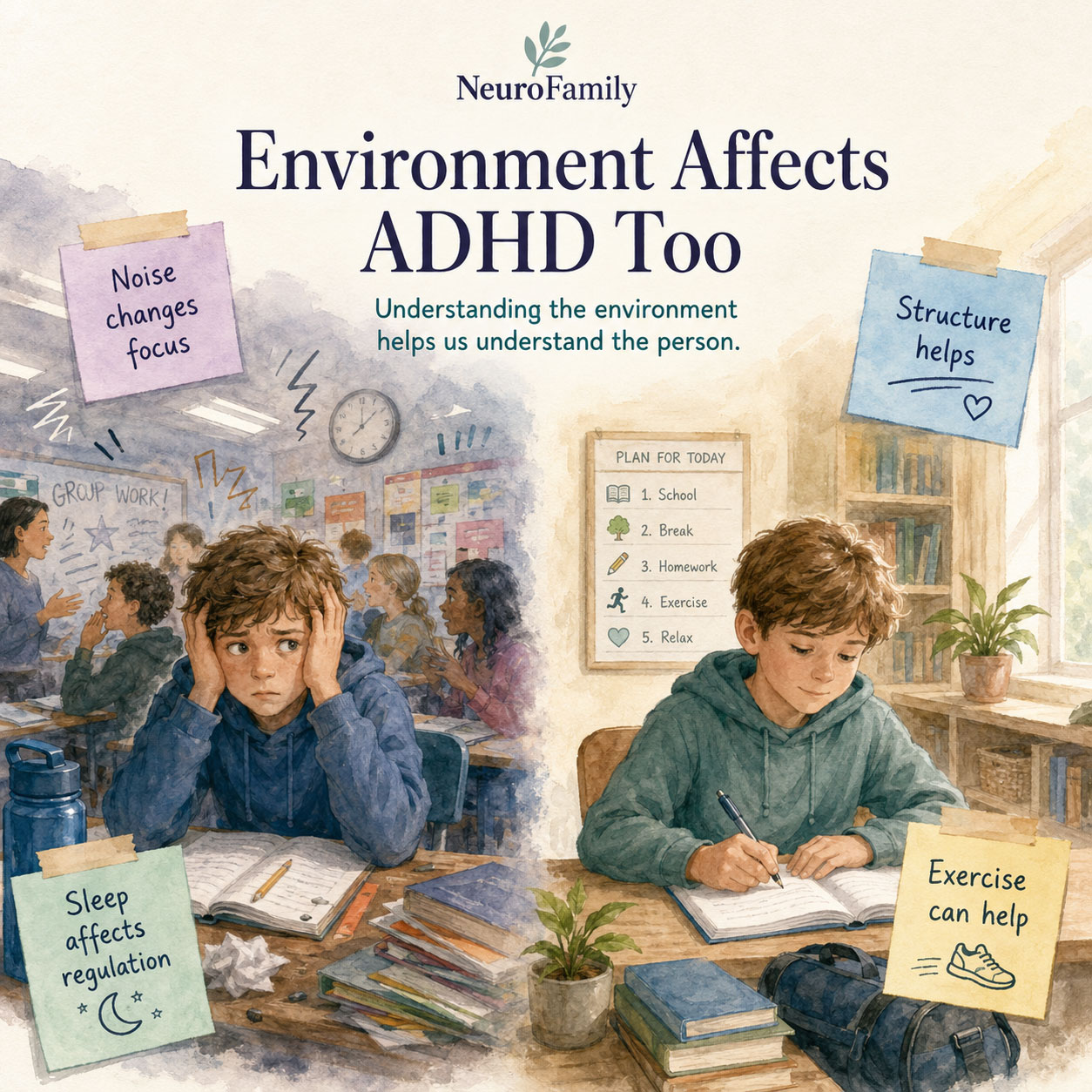
A child who struggles with attention may find a noisy classroom considerably harder than a quiet one.
Someone experiencing executive functioning difficulties may cope differently depending on the structure and predictability around them.
Sleep deprivation can make regulation more difficult.
Exercise may help another person regulate.
None of this proves or disproves ADHD.
It helps us understand what affects the person.
There is an important difference between saying:
“Your environment influences your difficulties.”
and:
“Therefore your difficulties aren’t real.”
We should not confuse the two.
A television programme doesn’t invalidate your experience
Whatever conclusions The Great ADHD Myth? eventually reaches, one thing will remain unchanged.
Your experience is still your experience.
If you have spent years struggling with attention, regulation, impulsivity, executive functioning or other difficulties, those experiences don’t disappear because somebody asks a question about ADHD.
ADHD also remains recognised within current NICE guidance as a neurodevelopmental disorder.
One documentary does not change that.
And neither does the professional title of somebody appearing within it.
A professional questioning how we understand ADHD does not automatically invalidate another professional’s assessment, your diagnosis, your child’s diagnosis or your lived experience.
Different professional perspectives can exist at the same time.
The important thing is that we don’t take one voice — however qualified that person may be — and use it to stop listening to the individual.
Perhaps, therefore, we can approach this programme differently.
Rather than asking:
“How do we defend ADHD from this programme?”
we could ask:
“What conversations might this programme allow us to have?”
If somebody approaches you afterwards and says:
“I watched that programme about ADHD…”
We don’t necessarily need to prepare ourselves for confrontation.

We could ask:
“What did you think?”
Listen to their answer.
And then perhaps say:
“Would you like to know what it’s actually like for me?”
We have just turned a potential argument into an opportunity for understanding.
Watch. Listen. Question.
We don’t need to decide whether The Great ADHD Myth? is good or bad before watching it.
We can listen to the professionals appearing in the programme without assuming that professional authority automatically makes one perspective the only perspective.
We can agree with some things.
We can disagree with others.
We can check what is being said against the wider evidence.
We can listen to other professional perspectives.
And we can listen to the people who actually live with ADHD every day.
Most importantly, we can remain curious.
Because perhaps the greatest risk isn’t somebody asking:
“Is this really ADHD?”
The greater risk is somebody deciding they already know the answer and therefore no longer asking:
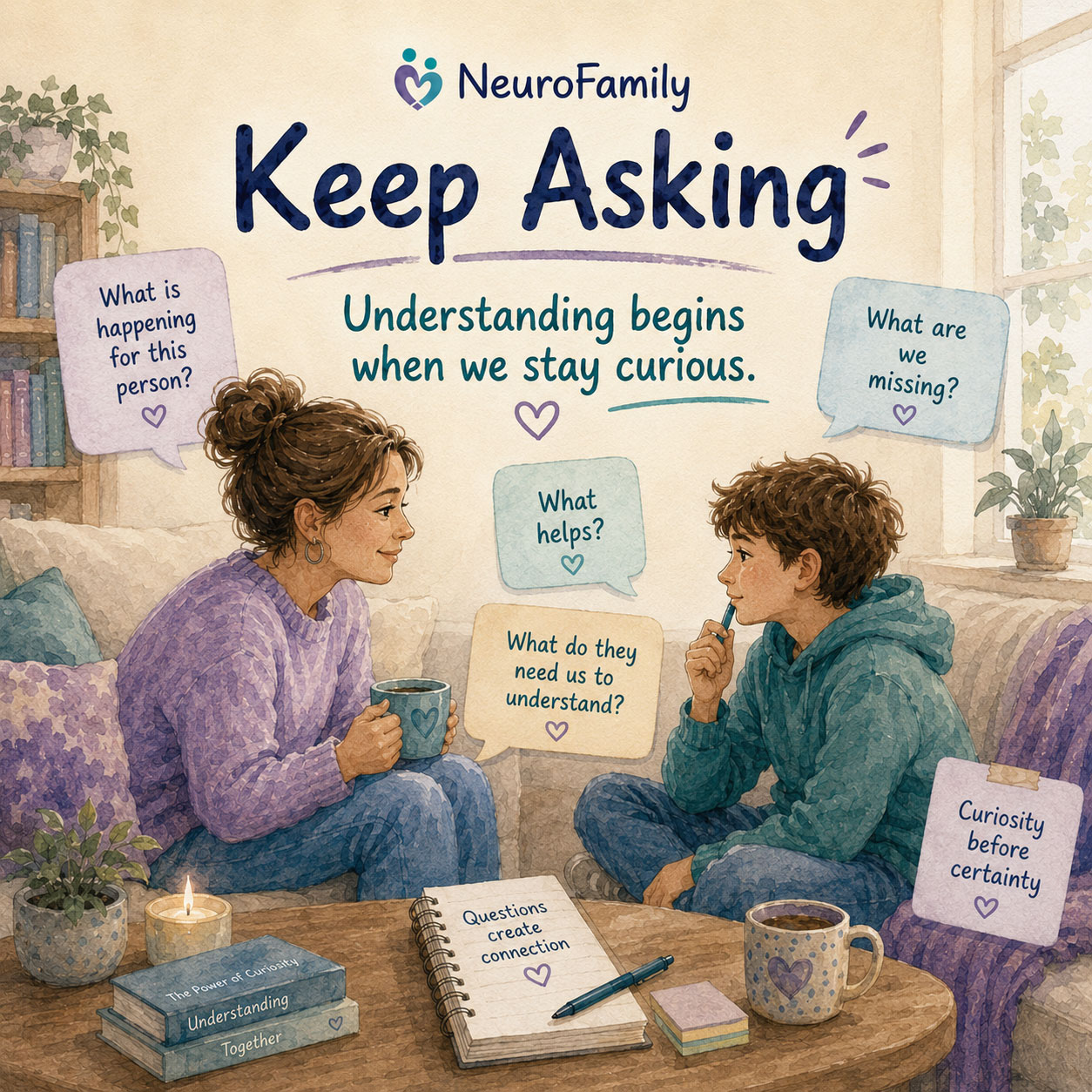
What is happening for this person?
What are we missing?
What helps?
What do they need us to understand?
A diagnosis can provide an explanation and open doors to appropriate support.
Medication can be an important tool.
Environment can make an enormous difference.
But none of those things should replace our curiosity about the individual.
Questions don’t have to undermine understanding.
Sometimes questions are exactly where better understanding begins.
Understanding First.
The Great ADHD Myth Why We Shouldn’t Be Frightened of Questions by Gordon Forsyth
Tags: ADHD, Attention Deficit, Dyscalculia, Dyslexia, Dyspraxia, Neurodivergent, PAACT Family, Pathological Demand Avoidance Syndrome, PDA, Rejection Sensitivity Disorder, RSD, Selective Mutism, Tips, Trauma Informed Care